
Showing posts with label Butter. Show all posts
Showing posts with label Butter. Show all posts
Thursday, April 30, 2026
Cambridge Butter - Sold by the yard

Tuesday, December 30, 2025
Roasted Butter. on a spit. before a fire!

Saturday, October 1, 2022
Dog wheel for butter churn

Sunday, May 22, 2022
Barrel butter churns 1758-1805

Thursday, January 20, 2022
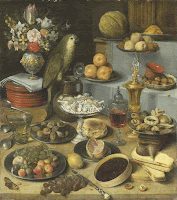
Banqueting sweets for a Prince of Wales c1610
Monday, February 24, 2020
Making butter yellow
 Winter butter was pale, but was enhanced with carrot juice, marigold, annato, turmeric and even egg yolks for selling in the cities. "No one in the country will eat colored butter in winter except as the
milk colors it." The taste and color naturally improved when the cows ate grass instead of their winter diet of hay. More on grass butter HERE
Winter butter was pale, but was enhanced with carrot juice, marigold, annato, turmeric and even egg yolks for selling in the cities. "No one in the country will eat colored butter in winter except as the
milk colors it." The taste and color naturally improved when the cows ate grass instead of their winter diet of hay. More on grass butter HEREMonday, January 27, 2020
Bitter butter in winter

Monday, September 5, 2016
People powered churns
 We often think of the dairymaid charmingly churning butter in a picturesque setting (image below) - plunging the dasher into the churn or turning the handle of a barrel churn; but in 1850s Holland, other devices were created to churn 200 quarts of cream at a time. The Treadle Lever or standing see saw; and pulling down large levers...
Monday, August 29, 2016
Dogs and sheep churning butter ... on a treadmill
 Dogs were workers: sheep herding, turning spits, watch dogs, and on the treadmill to churn butter in a swing or dash churn. By 1832 dog churns were common along the Hudson River. Descriptions and images from 19th century NY and New England works...
Monday, June 20, 2016
Skim milk and buttermilk

Where was each popular? Ireland - skim milk; Cheshire - buttermilk; but in southern England, buttermilk was avoided. Skim milk for calves; buttermilk for pigs. Cream or whole milk to make butter...
Tuesday, May 31, 2016
"May butter" or "grass butter" lambs (or dogs) ... in Holland

Monday, May 23, 2016
Making butter

Monday, October 5, 2015
Tallow from suet for candles, soap and... pie crusts

Tuesday, January 28, 2014
You are what you wear
 Literally. 'Grotesques costumes' created by Nicolas de Larmessin (died 1694) included many tradesmen and women. Tools and products of each trade will give a hint on what is being sold that is cooking related, such as the fruit vender. Try to guess the others... Click to enlarge.
Monday, July 29, 2013
Butter shapes - 2
 Continuing with Dutch, Flemish and French butter in paintings from the 17th, 18th and 19th centuries.
 The butter in a mound shape is from Pieter de Hooch's A Woman Preparing Bread, (Dutch c1660) in the Getty Museum.
Tuesday, June 25, 2013
Butter Shapes

Monday, June 10, 2013
Garlic Butter
 Not for Italian bread...but when cows ate wild garlic in the spring, the flavor remained in the
milk, and the cream was churned into garlic flavored butter.
Not for Italian bread...but when cows ate wild garlic in the spring, the flavor remained in the
milk, and the cream was churned into garlic flavored butter.
Subscribe to:
Posts (Atom)

 Posts
Posts

